“it’s so awkward, we share a bathroom but it doesn’t have a lock on it, scarryyy!!.”
What is Homie?
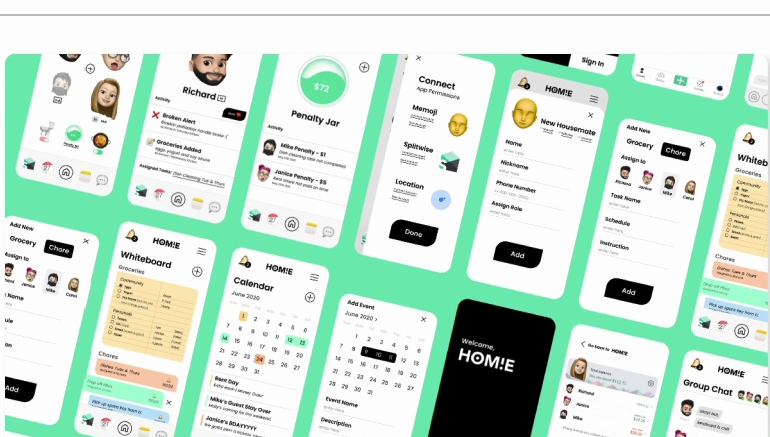
Living with roommates and sharing spaces introduces complexities leading to stress & awkwardness. Homie is a mobile app design for a platform that offers seamless roommate dynamic navigation ensuring harmonious cohabitation and streamlined interactions. It acts as a one-stop-shop for all things related to living with others like chores, splitting finances, sharing common spaces and more. It uses light hearted analogies and a fun look and feel to promote the feeling of friendship, ease and a stress free environment.

Living with Roomates = Awkward & Stressful.
I conducted user interviews with 7-10 users who were currently living and sharing a space with 2-3 people. The questions of my interview were aimed at understanding what the pain points were and what emotions one went through
while living with others. Most of the people I interviewed where within the age group of 18-35 and were either students of early career professionals. The interviews were very relatable and the major themes were the following:
“It would be nice to have one app for everything like rent, expenses, groceries bla blah”
“Roommate fights are the worst, it gets so awkward and then you just have to live.”
“My roommates aren’t really home much, so im sometimes knocking on empty rooms”
“There needs to be accountability in the dynamic, some people are spoilt”
“It needs to be easier to be able to live with other people”
“hate when people don’t keep common spaces clean, it is everyone’s responsibility”
“Telling a roommate to do something is kinda awkward.”
3 Rounds of Sticky Notes
Round 1: Ask as many questions
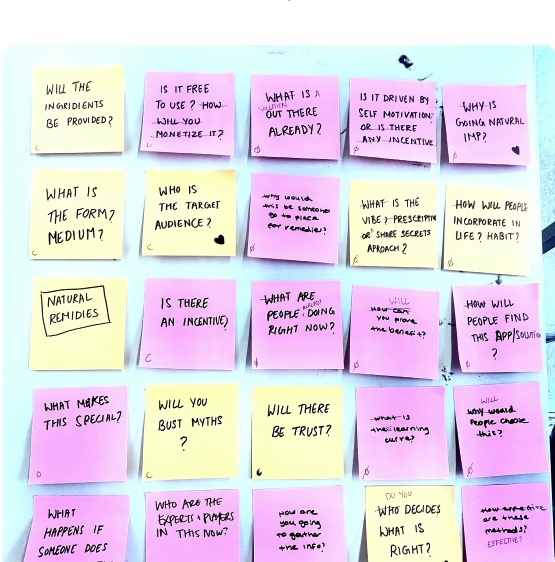
Round 2: List as many problems
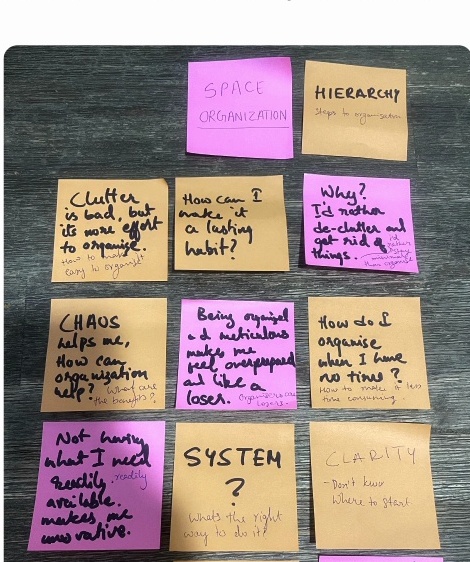
Round 3: List as many solutions
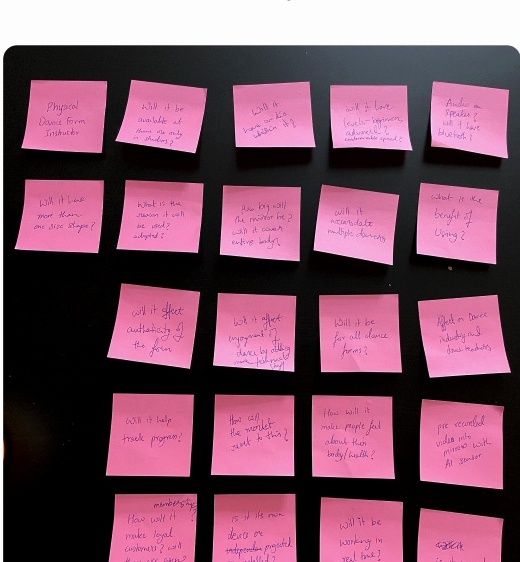
What problem to focus on, comparing impact and building effort levels.
Low Effort
High Effort
High Impact
penalty jar
space occupation
location status
chore reminder
adding new roomate
grocery chart
Low Impact
announcements
guest notification
send love
finance manager
group chat
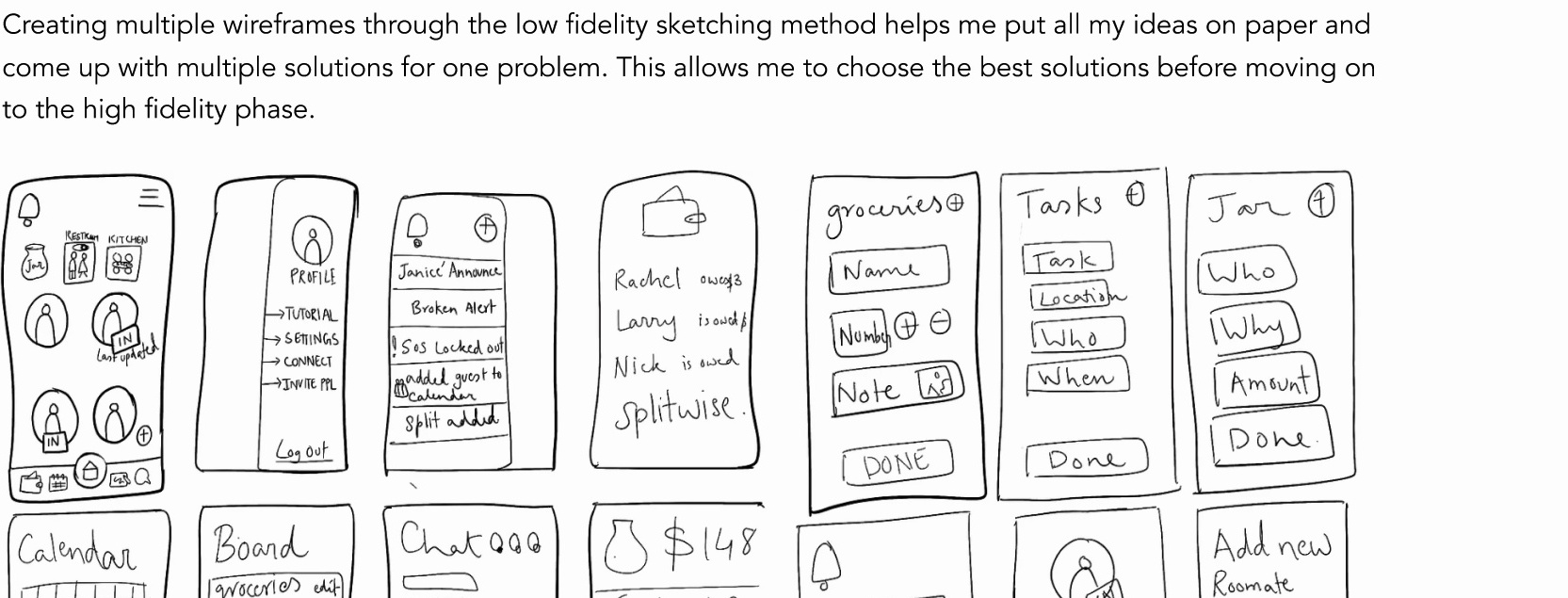
A problem can have multiple solutions
Creating multiple wireframes through the low fidelity sketching method helps me put all my ideas on paper and come up with multiple solutions for one problem. This allows me to choose the best solutions before moving on to the high fidelity phase.
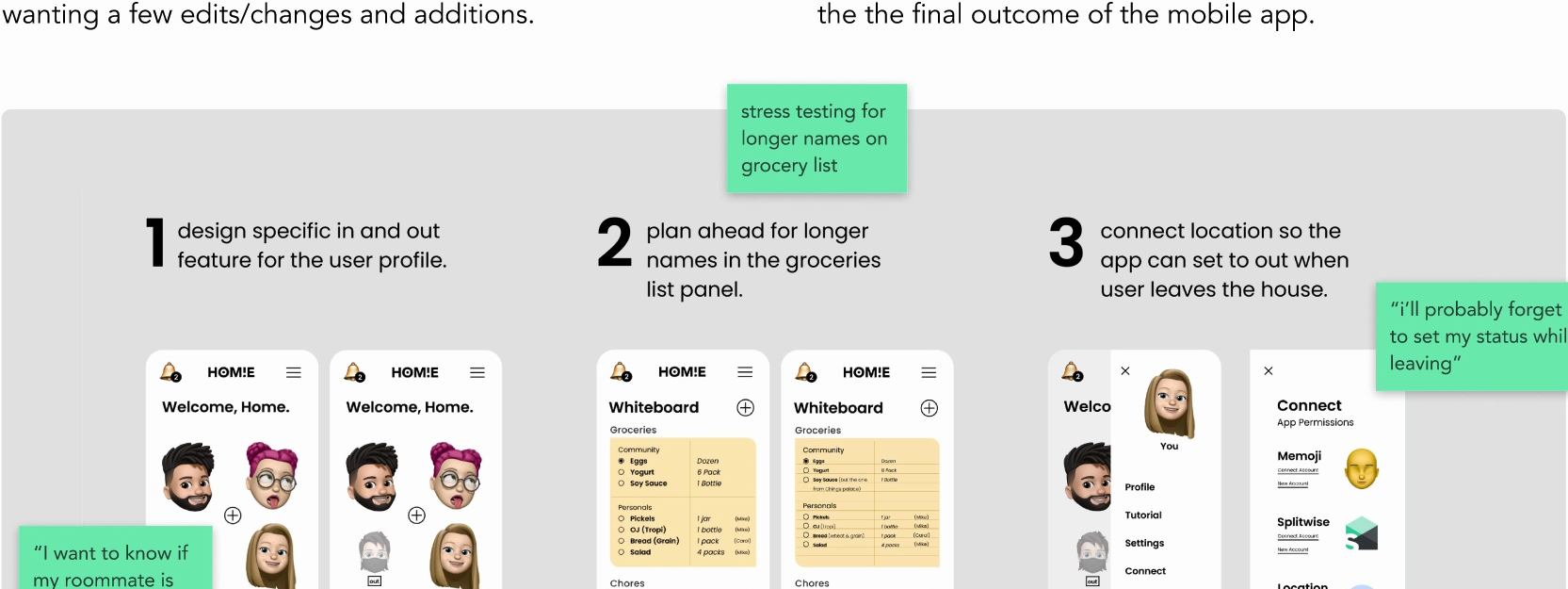
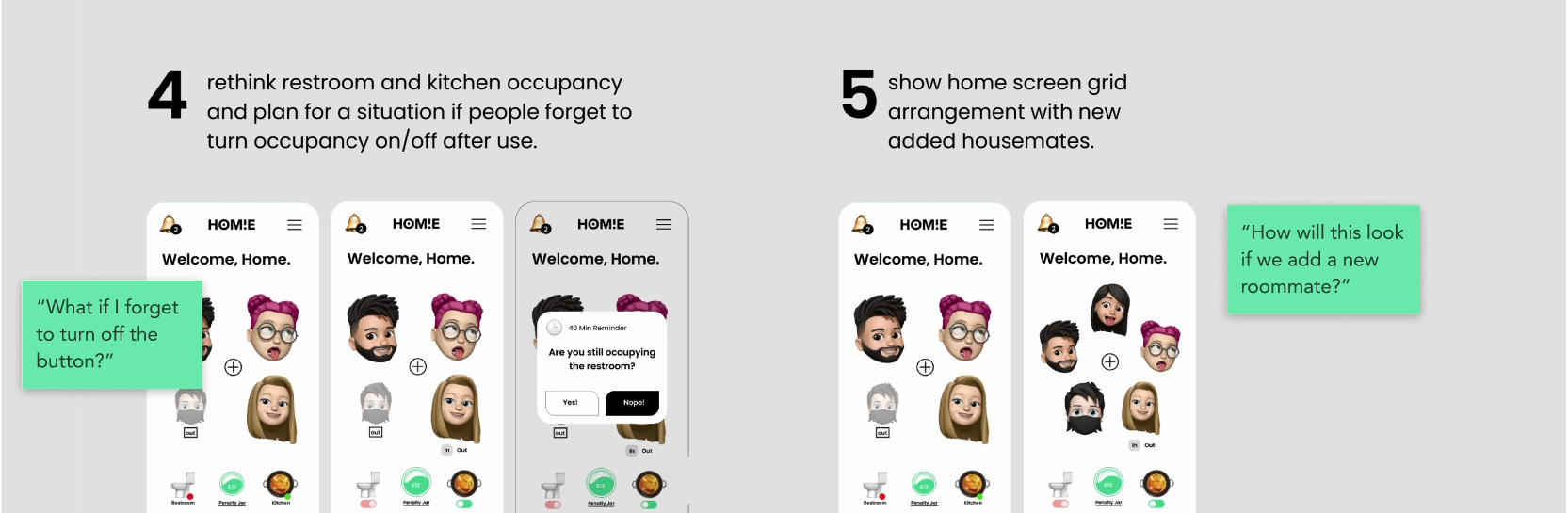
How did the feedback affect the outcome?
After incorporating findings from the user interviews above, I created mid fidelity screens of the app concept. I then conducted a round of user testing where users mentioned wanting a few edits/changes and additions.
Incorporating the new requirements/asks, and some revisions needed after stress testing screens, the following shows the journey of the app and how the feedback affected the the final outcome of the mobile app.
Favorites from the final Prototype
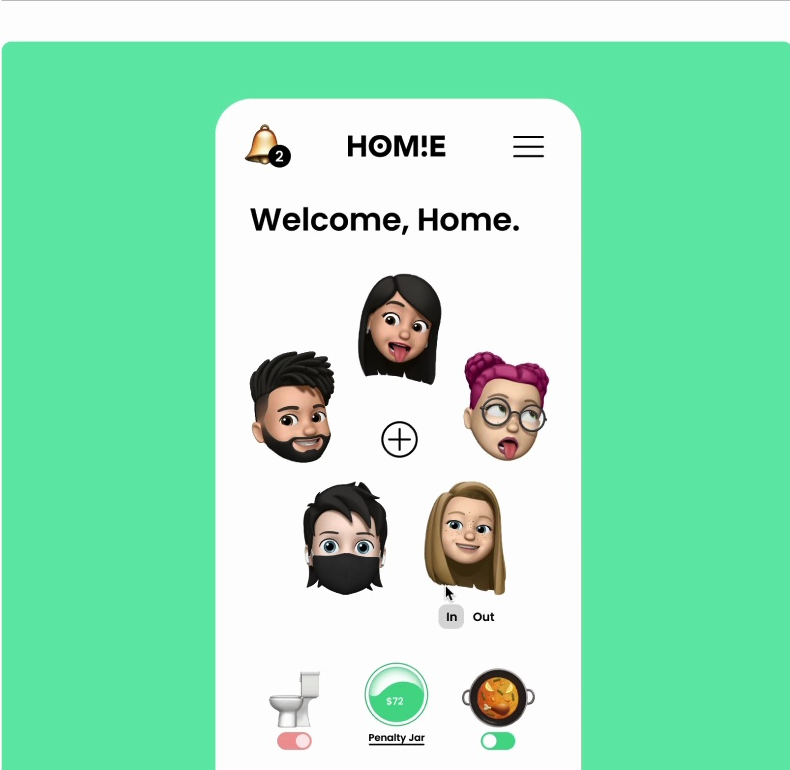
Penalty Jar
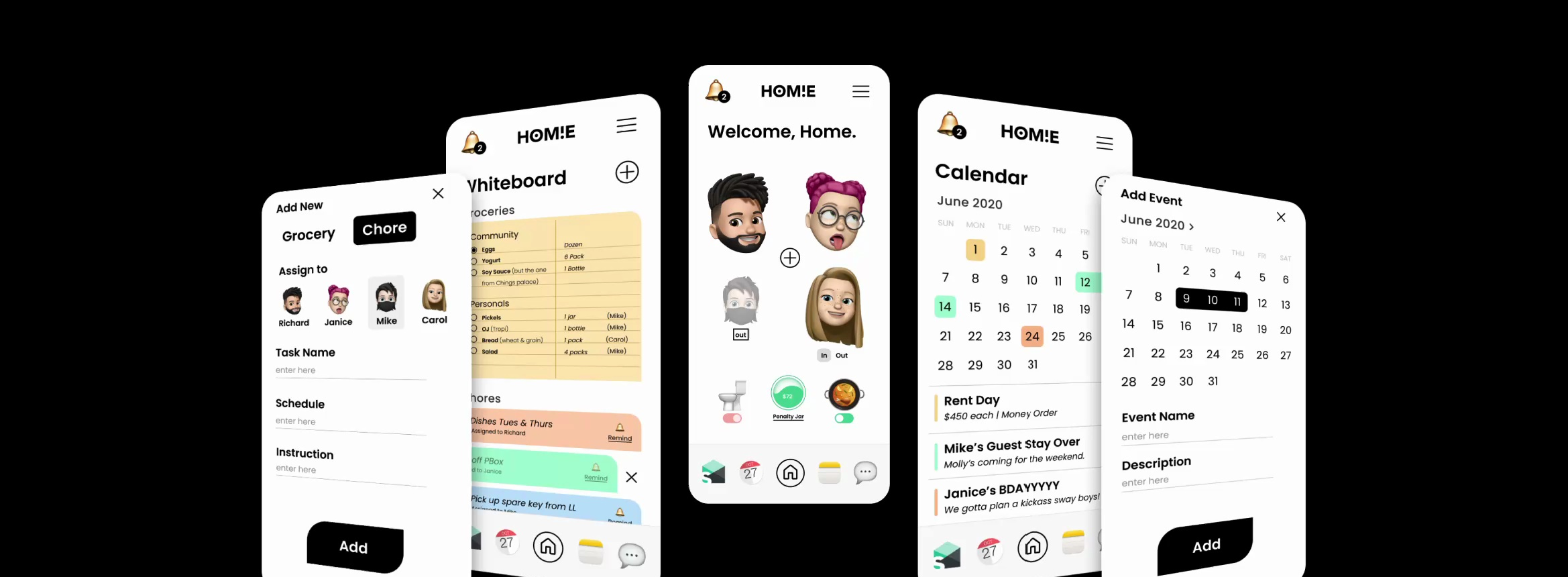
Add micro fines for each other to practice accountability. Could be for late rent payment, or undone chores. In the end of the month, order lunch or dinner together with the collected sum so it balances the amount for all.
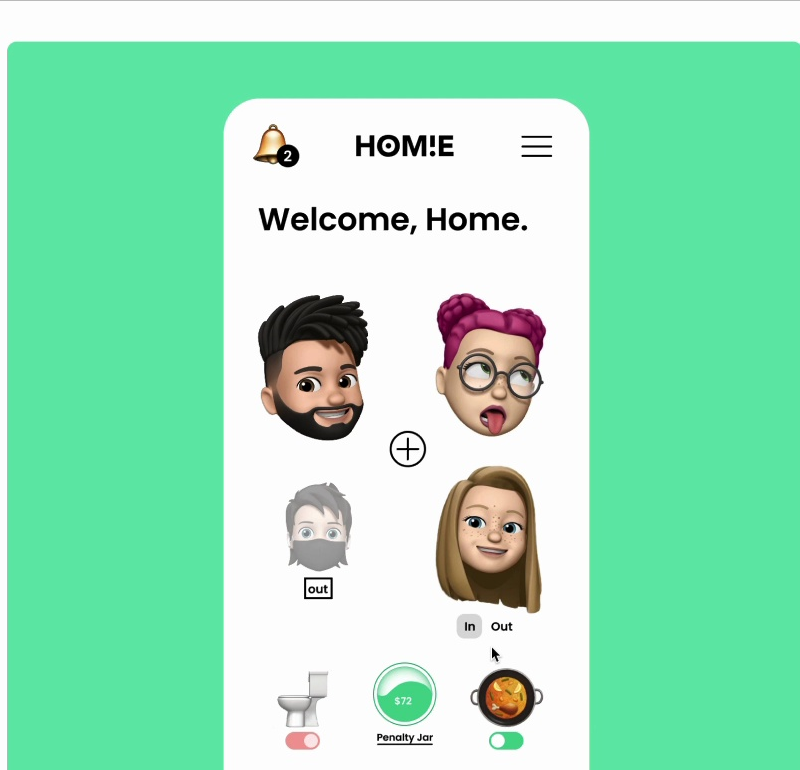
Shared Spaces
When using the bathroom or kitchen, swipe the toggle. Pop up reminders will reconfirm your occupancy in case you forget to turn it off after use. This lets others in the house know if shared spaces are available for use or not.
Group Features
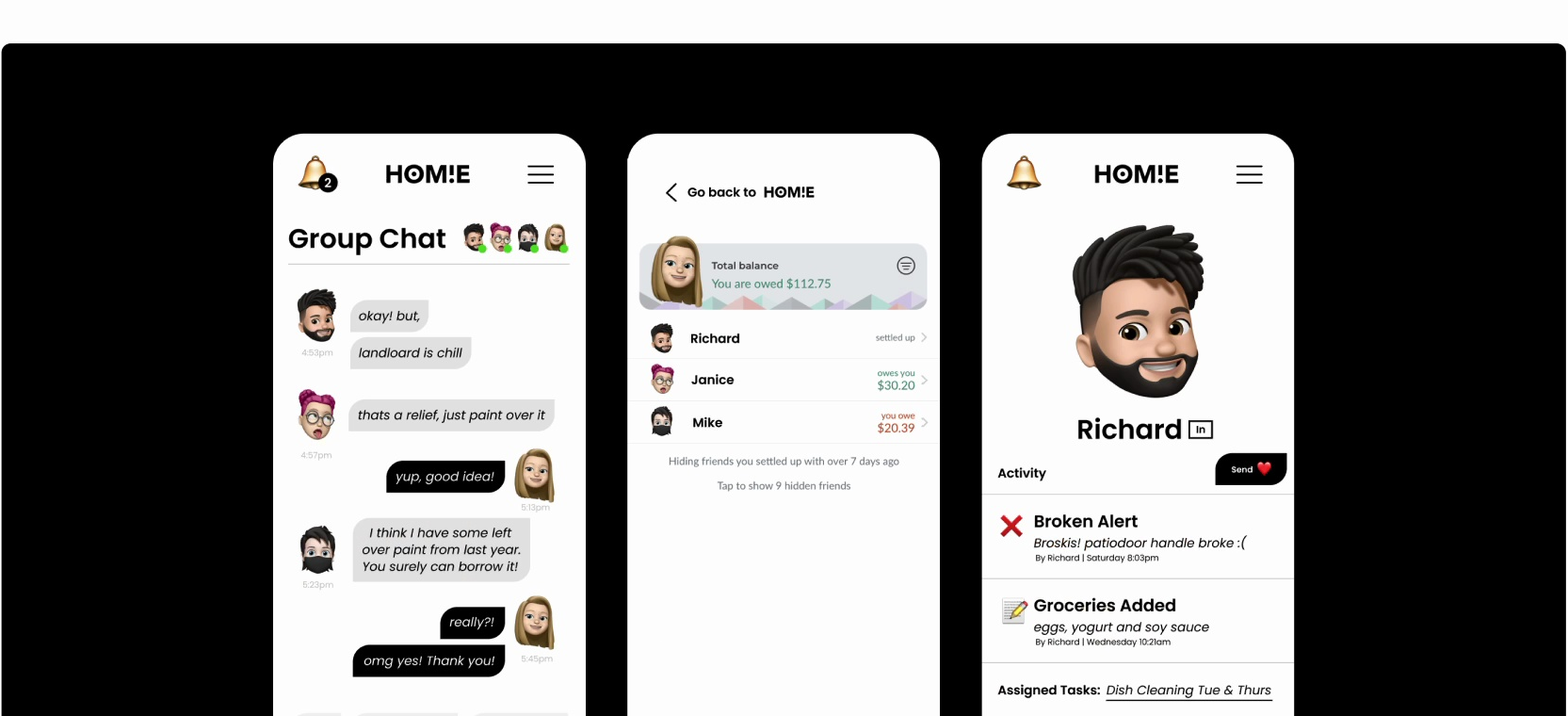
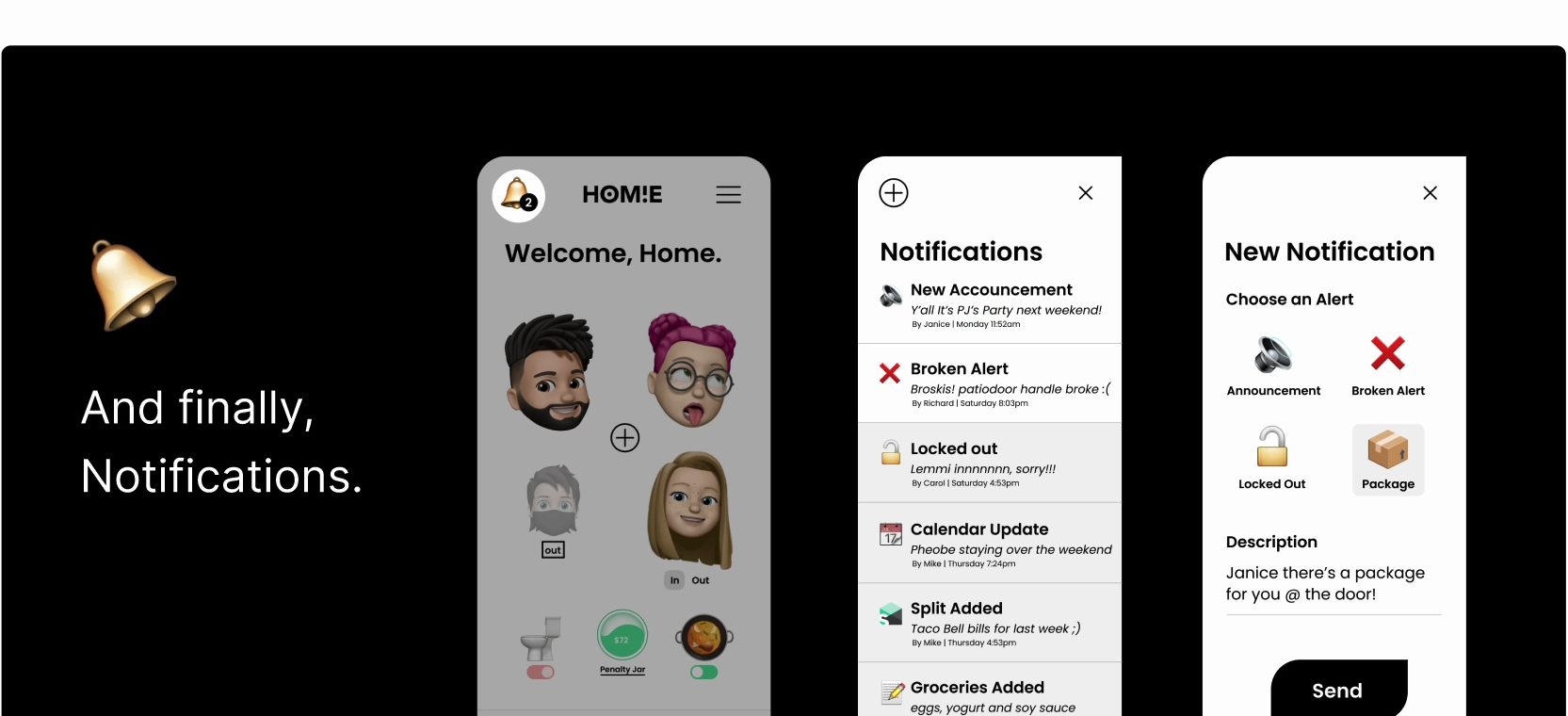
Add common or personal groceries to the digital white board or assign chores to each other and send anonymous reminders incase they forget. Set important dates in the shared calendar that acts as reminders for rent or bill payments, birthdays or guest stays.
Learnings + New Skills
Observational research trumps, Users can lie.
While designing digital products, it is extremely important to understand human behaviors. During user interviews, users might answer something they think is right but while studying the target audience in their natural environment, it is observed that they do something completely different.
Don’t reinvent the wheel when it works.
This project required a feature that allows roommates to split finances. I originally created an interface for it but then realized it was more practical to allows users to link up their existing splitwise accounts since they are already familiar with the platform and is also a top rated app used by the target age group for managing group finances.
Imagining the Future of Homie